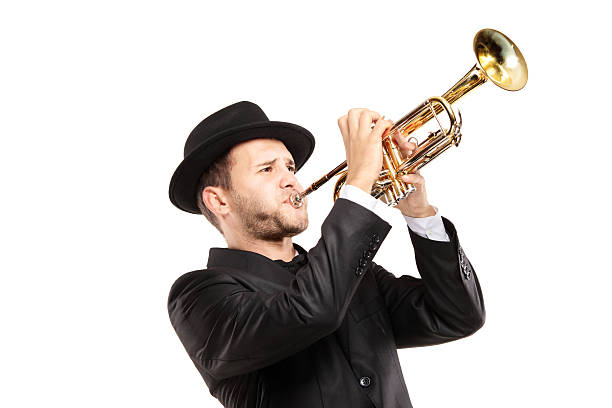
Here's some tips for anyone who wants to start learning an instrument! I'm no pro, but hopefully these pointers make sense, especially the ones for fledgling flautists!
I'd say the first thing you should do if you want to learn an instrument is to acquire it! This can be pretty hard, since even beginner level instruments can be expensive or take up a lot of space. However, if you're serious about learning, then I would honestly suggest saving up to buy a new or well-maintained instrument, especially if it's going to touch your mouth. Secondhand instruments, unless kept in pristine condition by their prior owners, can be broken or not serviced in a long time, so you may incur additional costs apart from the initial purchase.
Now that you've gotten your instrument, it's time to get a feel for it. Observe how different parts interact with one another and learn proper embouchure (how to blow air into the mouthpiece)/how to properly hit, pluck or strum it. For instance, I'm no expert in brass instruments, but I do know that it's truly dangerous to blow on say a trumpet or trombone with your cheeks puffed out! Just like you would when training for a sport, make sure you're looking after yourself when practicing. After this, work on your posture in front of a mirror. Trust me, you're going to want to nip bad posture in the bud before it starts causing you long-term pain or discomfort. It'll improve your sound too!
Now that you've done all that, start learning your first scale! Look up a note that's easy to learn for your instrument (for instance, B flat on a trombone) then once you've aced that, move on to learning the rest of the notes in that scale! Make sure you're learning the correct fingering for each note. Oh yeah, a scale is a series of notes, grouped into octaves (8 notes), which are ordered by their pitch. Scales are extremely important as they're like musical blueprints. Once you get them, you start seeing them in all your pieces, making sight reading (playing a piece without having practiced it before) much less torturous. If you want to play the drums or other untuned instruments, don't worry about scales, focus on mastering basic rhythms.
Speaking of rhythm, it's another essential key to the puzzle that is music. It contains important concepts such as the beat, tempo and time signature. The beat is the pulse of the music; what you'd clap to when listening to a song you like. The tempo is basically the speed in which the music is played and is measured in BPM (beats per minute). It can range from Adagio, which is slow, to Allegro, which is more lively. These terms also contain stylistic/emotional nuance that informs the way the musician ought to play the piece.
Ok so I'm about to go on a bit of a tangent but it could be useful if you're looking to play with sheet music.
I cant really explain the time signature without first going through the different types of notes, so here's a quick table displaying a few common ones:
| Note | Name | Length | Amount needed to reach 4 beats |
|---|---|---|---|
 |
Semibreve | 4 beats | 1 |
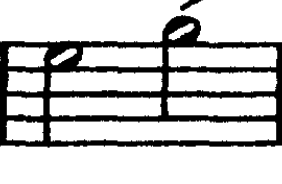 |
Minim | 2 beats | 2 |
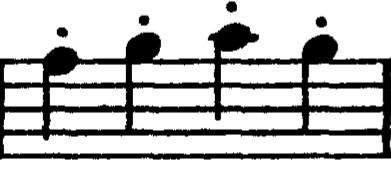 |
Crotchet | 1 beat | 4 |
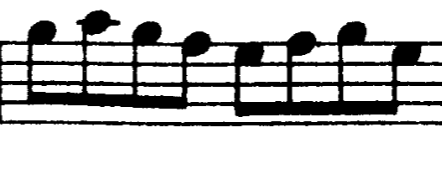 |
Quaver | 1/2 a beat | 8 |
 |
Semiquaver | 1/4 of a beat | 16 |

Here's some things to help get you started:
Embouchure: start by relaxing your face. If you're tense, your sound will suffer! Now pick up your headjoint and put it below your lips. Slightly angle your upper lip so that it's portruding a bit from your lower lip, and say 'too' or 'doo', really emphasising that consonant while making sure you're letting a bunch of air out. Some kind of sound should come out, but if not, don't worry. Just keep playing around with it and something will happen. Don't roll your headjoint inwards too much; it's bad for your tuning, and remember that your lip should be covering around 1/4 to 1/3 of the opening. Here's a visual example of good embouchure:

Posture: Don't be like me! Pay attention to this as soon as it comes up!!! Make sure your shoulders are relaxed when you have your flute up. Keep your back straight and your flute up. Don't sag: it's a very bad habit that will impact your stamina as you move to playing longer pieces. When you're standing, keep your legs shoulder width apart. If you notice your upper body twisting down, gently correct yourself and practice catching it in front of a mirror. When seated, keep your feet planted on the ground, also shoulder width apart. Make sure your stand is tall enough that you can see your music without having to hunch over or droop to one side, but not so high that your face is covered.
Articulation: This is one of the ways you can manipulate the air while you play. To begin with, start by tonguing normally. That is, playing each note with that 'too'/'doo' that I mentioned earlier. Later on, try slurring your notes. Choose a sequence of notes, toungue the first one, then keep blowing and switching notes without making that 'too'/'doo' after that first note. Your default articulation should be tonguing; slurring in sheet music is indicated by a curvy line placed above the notes. See if you can spot any on this page's background!
I'll be going through my music things soon, if I find my old music book, I'll share some useful things from that as well. For now, have fun learning! You won't regret learning to play an instrument.